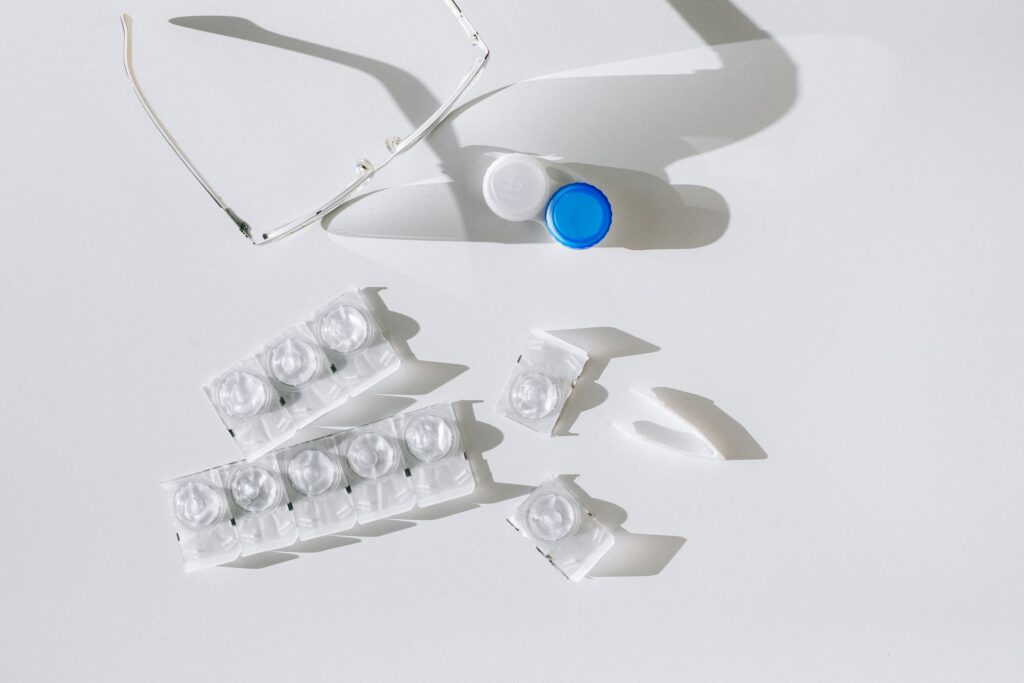
Contact lenses are wonderful for correcting nearsightedness, farsightedness and astigmatism (depending on the prescription). They allow you to see without having to think about your glasses falling off, give you freedom of movement and a full field of vision (if you don't have any other pathology).
They are also safe to wear and very comfortable, of course a good fit goes hand in hand with your eye health. That's why if you haven't used them before or if you want to change the brand of your contact lenses, you should see your contact lens specialist.
Is this the first time you are going to wear contact lenses?
If this is your first time, what we need to do is a checkup to calculate your prescription and verify your eye health. This is vital for your contact lenses to fit properly, be comfortable and safe for you.
Contact lenses come in different sizes, materials and levels of oxygenation. That's why it's so important to be fitted by a contact lens specialist. If you buy them

Not everyone can wear contact lenses:
That's right, while many patients kill to wear them, not all are candidates for eye health reasons:
- Ocular dryness. When the eye does not have good lubrication the contact lens becomes intolerable, it is like having stones in your eyes. If you wear contact lenses with a dry eye, the lens can scratch or rub the cornea, making it prone to ulcers, infections and conjunctivitis.
- Ocular infections and inflammations. If you suffer from blepharitis, conjunctivitis, keratoconjunctivitis, corneal ulcers, giant papillary conjunctivitis, pterygium or any other eye problem, it is better not to use your contact lenses until the situation is resolved and your contact lens specialist tells you that you can use them again. If you have been through this, it is advisable to have regular checkups to keep any recurrence at bay.
- Use of drops. There are several eye drops that should not be used with contact lenses. To begin with, no medicated eye drops can be used with contact lenses unless expressly authorized by your contact lens specialist and ophthalmologist. Several artificial tears also cannot be used with contact lenses. Doing so will not only damage your contacts, but may increase the risk of damage to your eye.
- You work in hazardous locations. If your job exposes you to dust, sand, dirt or chemicals, it's best to check before you wear your contact lenses. This saves you from getting something you don't want in your eyes.
- Inability to follow instructions. Yes, we know this one is hard for some people to understand, but if you can't follow your contact lens specialist's instructions, it's best to stop wearing them. Sleeping with lenses that are not suitable for naps or long nights, cleaning them improperly or exceeding the time of use, can only bring you important consequences from a slight infection to ulcers and visual loss.
What do I do if I identify with a contraindication, but still want to use them?
Communication is the key to success. Go to your contact lens specialist, talk frankly with him or her. Tell him or her why you want to wear contacts and explain all the symptoms, diseases, medications and other things you are going through or taking. This way your contact lens specialist will be able to guide you and recommend what is best for your case.
We hope to have you soon in our opticians, where each of our doctors is a specialist in contact lenses. We can advise you not only on contraindications, but also on the best material, design and technology for you.
Thank you for reading us every Tuesday, remember to subscribe to our blog to get the information straight to your inbox (with a few surprises).
Thanks for sharing!